Building a digital-only brand under pressure:
Launching Phoebe Philo
In 2023, I led design for Phoebe Philo's LVMH-backed, digital-only fashion brand: a zero-to-one e-commerce platform under a non-negotiable deadline. Within 8 months, my team delivered a platform that handled half a million visitors on the first day, and completely sold out in 48 hours.
Role
Senior Product Designer (Design Lead)
Product
E-commerce, private client, Digital ID
Year
2023→24
All images courtesy of phoebephilo.com
The context
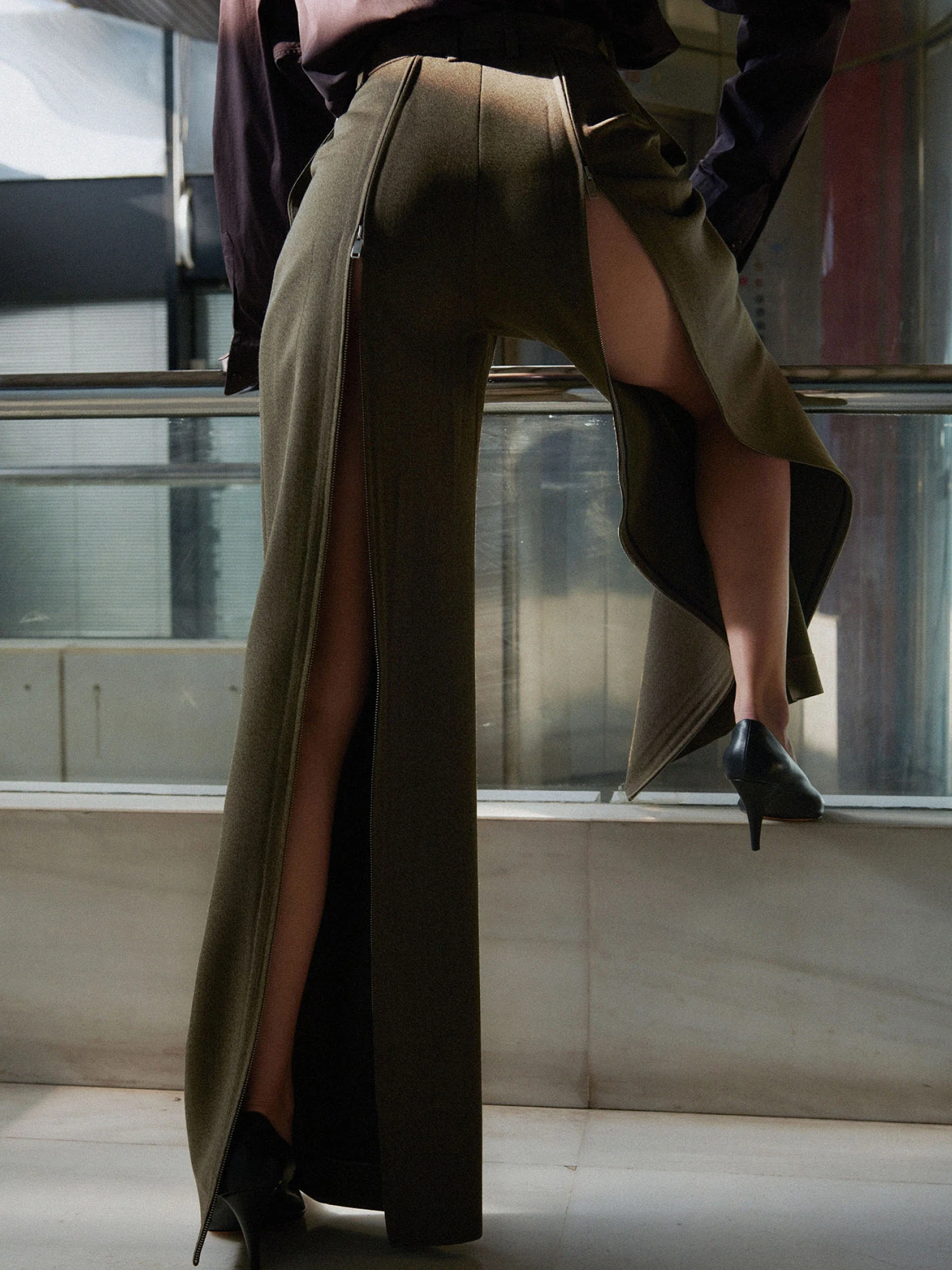
Phoebe Philo, the iconic British designer and former creative director of Chloé and Céline, is often defined as one of the most influential fashion designers of her generation, known for putting women, rather than trends, at the centre of her designs. After a four-year break, she announced in July 2021 that she would return to fashion with her eponymous label: a digital-only venture backed by LVMH.
My role
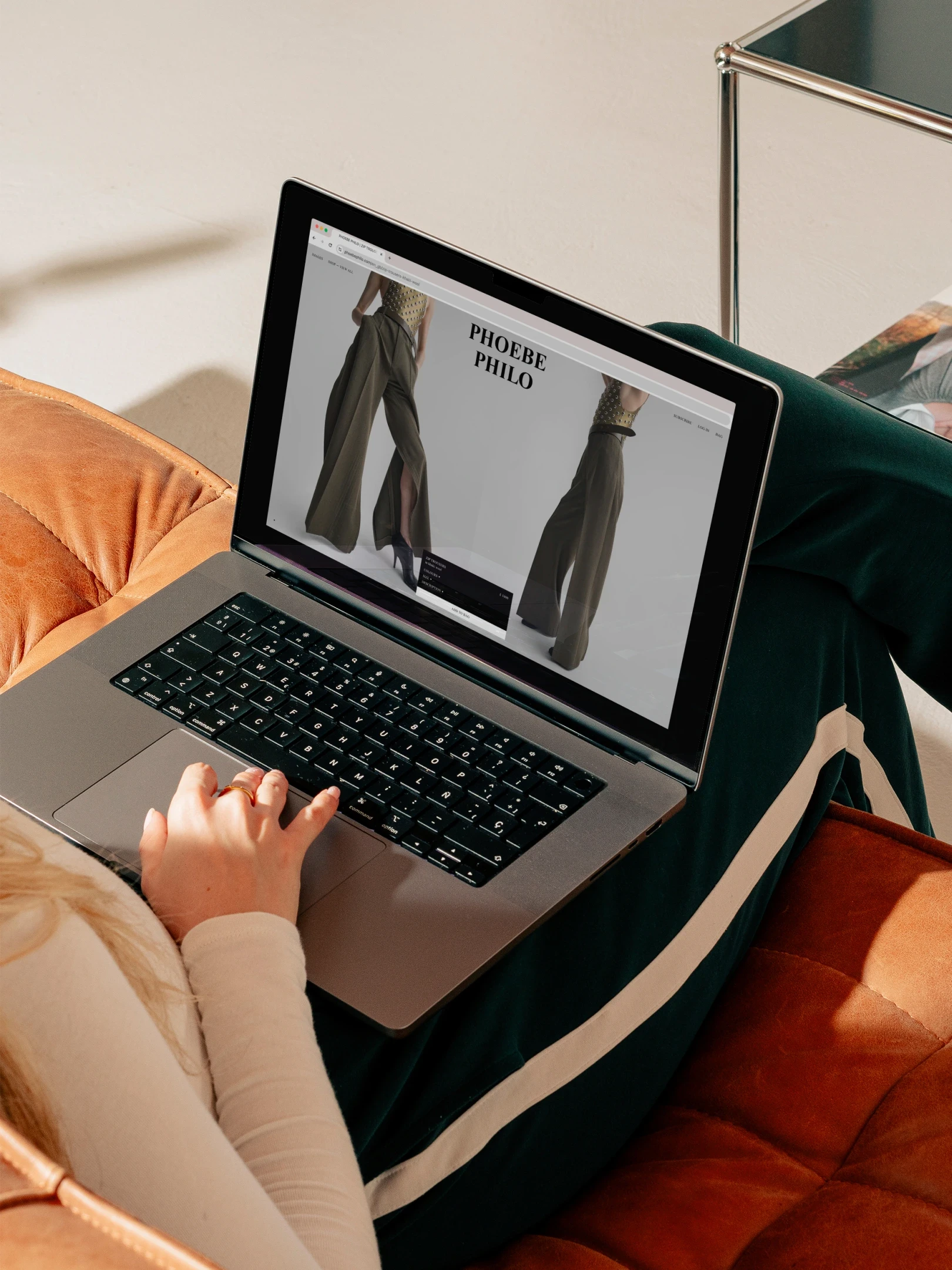
When I joined Phoebe Philo as the sole digital product designer in February 2023, the launch was already delayed by a year, and the team was under increasing pressure to deliver a digital experience by October 2023.
The challenge
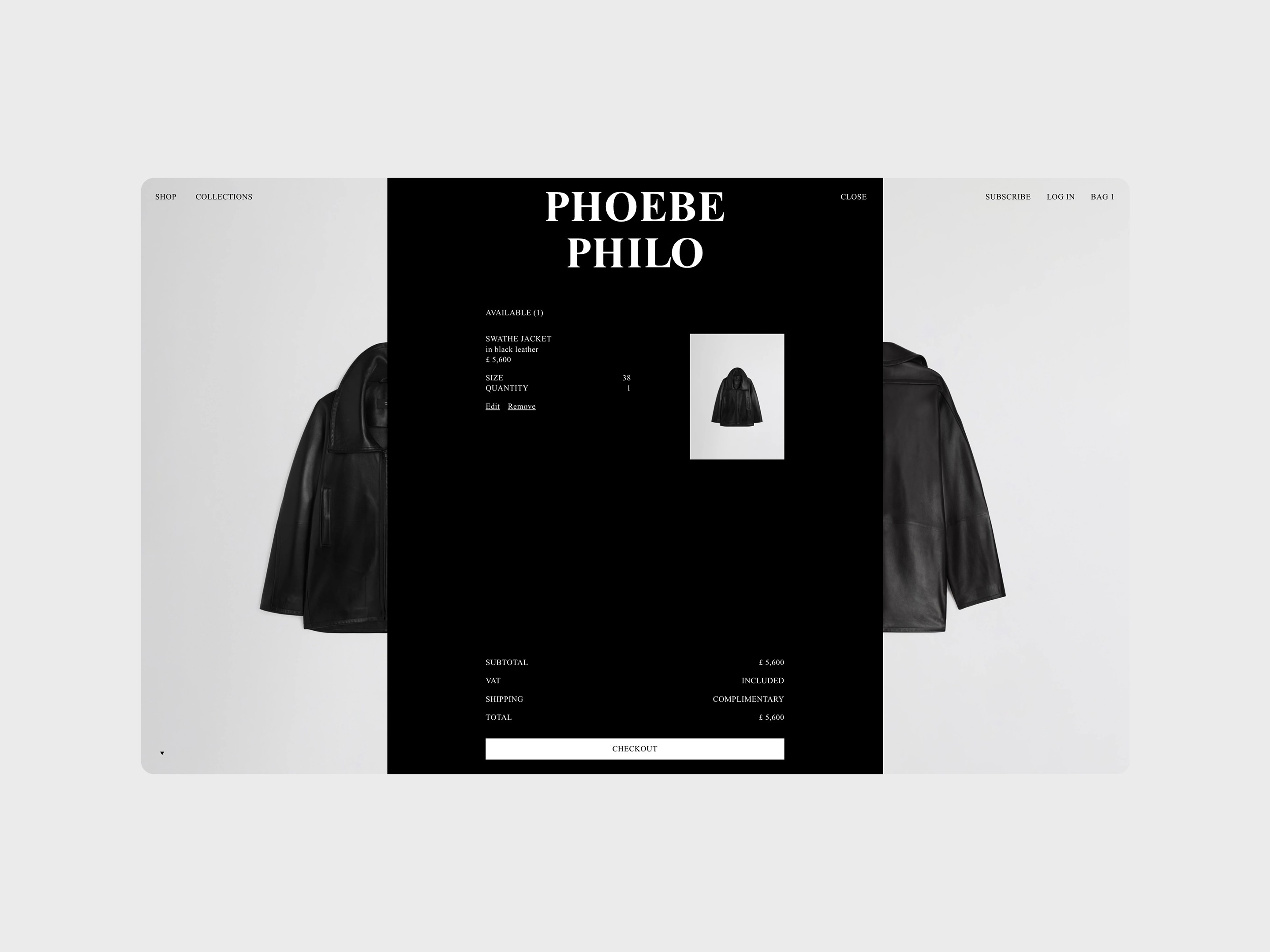
My task was to build a greenfield e-commerce platform capable of handling high levels of demand, giving customers the confidence to make considered purchases online, while translating Phoebe’s distinctive artistic vision into an intuitive shopping journey.
Business
How do we handle launch-day demand?
User experience
How do we remove friction without losing the considered feeling?
Brand
How much of the artistic vision holds up as a working product?
The research approach
Strict confidentiality meant external research was off the table, so I turned to proxy sources instead: private client managers who understood the existing customer base, competitor benchmarking, and stakeholder conversations across the business.
User prioritisation
The proxies revealed two distinct user groups: high-intent Buyers, ready to purchase the moment the site went live, and Browsers, drawn to the site for inspiration. Given the pressure surrounding the launch, we prioritised the former group, directing the majority of our resources towards creating a frictionless path to purchase.
Design decisions
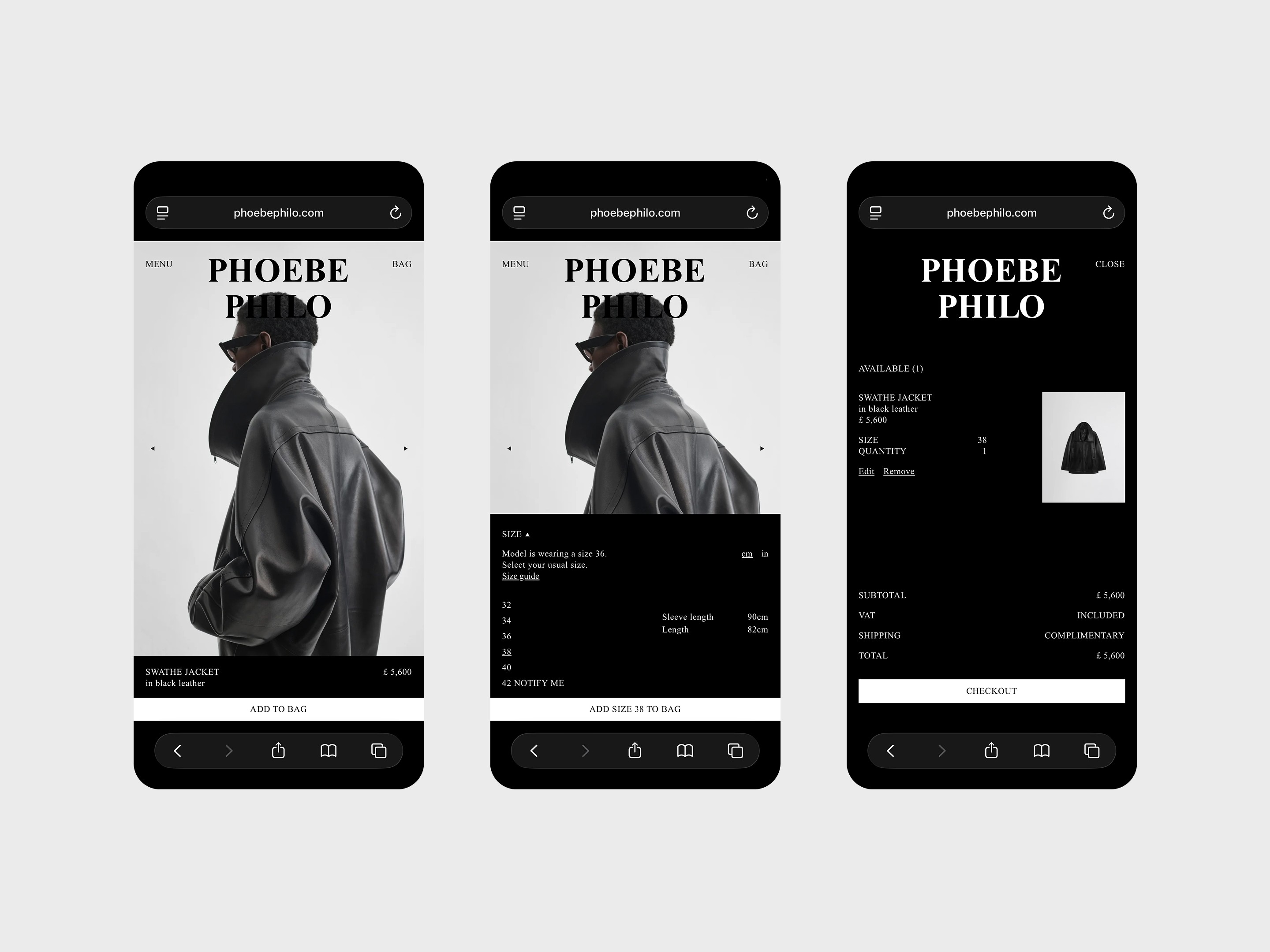
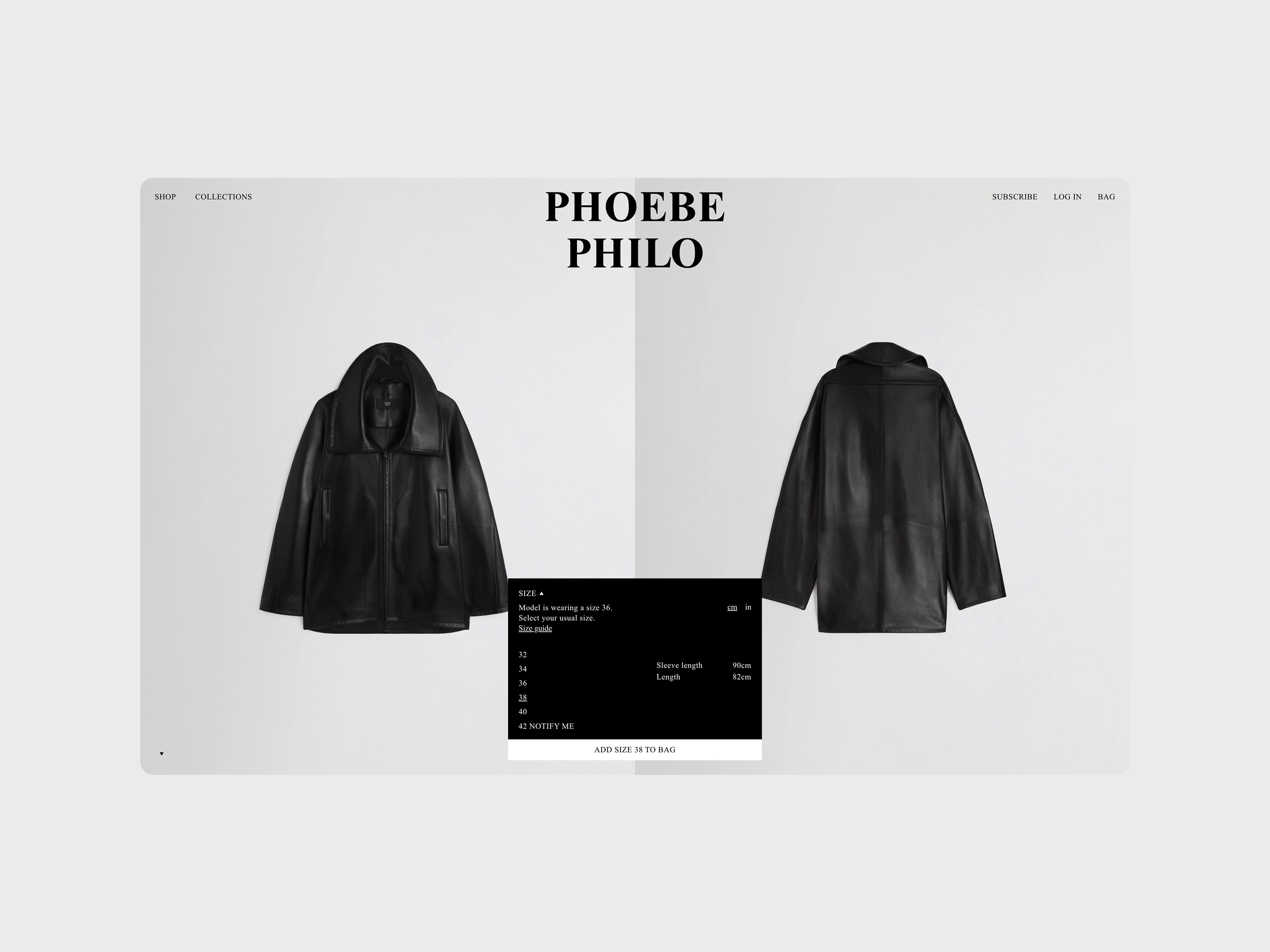
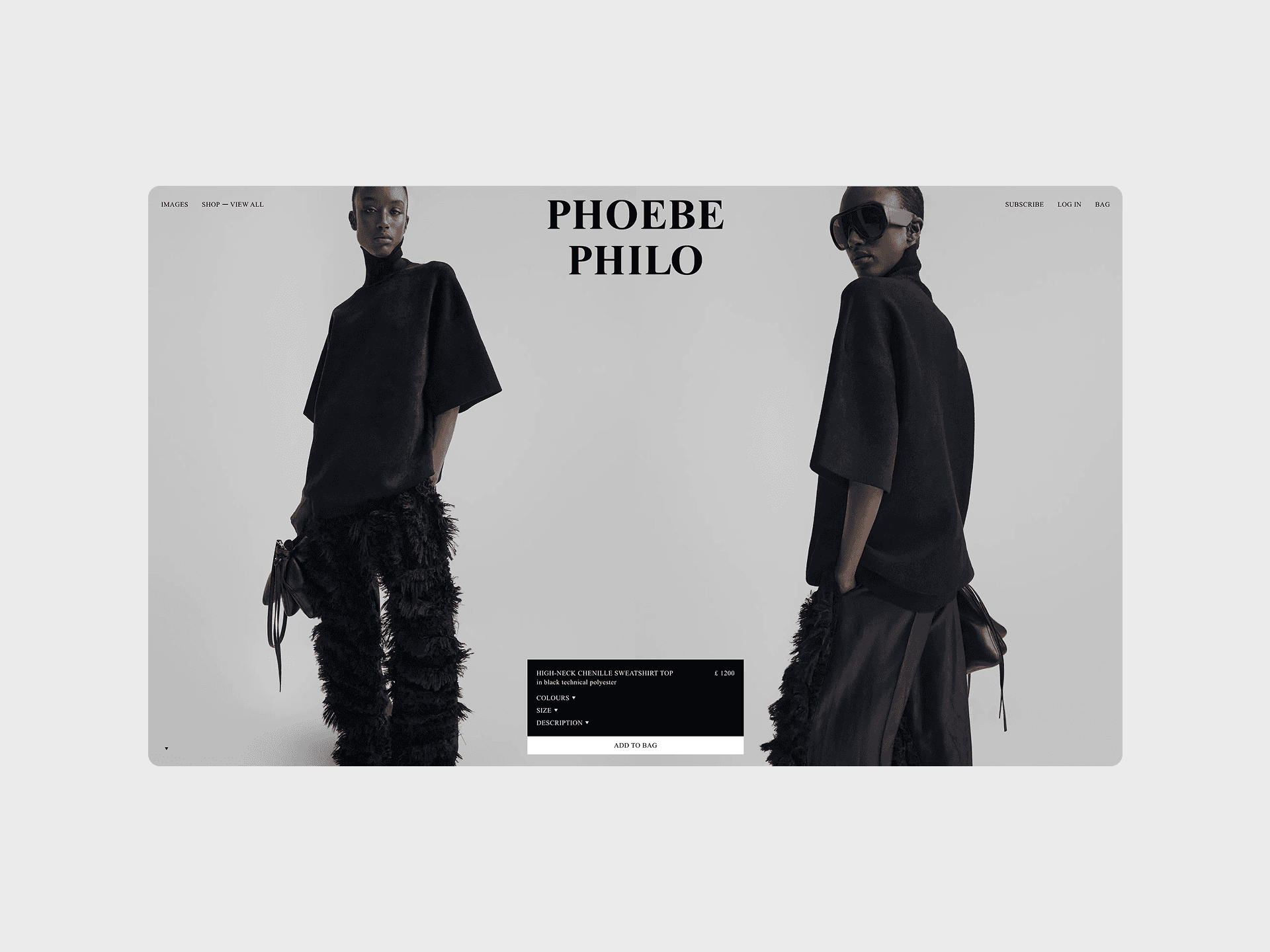
This meant designing for speed above all else: account creation opened two weeks before launch, allowing customers to complete this mandatory step in advance. Real-time stock visibility surfaced availability directly on the PLP, so customers could see what was available before clicking into a product. We also introduced clear size guides to give customers greater confidence in their purchase and help reduce avoidable returns.
Pre-launch risk mitigation
Anticipated Risk
Design Decision
Expected Outcome
Checkout bottleneck during high demand
Pre-registration with saved delivery details
Faster conversion during drops
Stock ambiguity during high-demand drops
Real-time inventory visibility with visual sold-out indicators
Reduced browse-to-cart friction and fewer abandoned sessions
Fit uncertainty without physical touchpoints
Detailed measurements and size conversions
Reduced fit-related support inquiries
Opening the size guide on PDP
The results
First 48 hours after launch
,000
unique visitors
%
sellout across all products
%
of buyers were pre-registered
Lessons from the launch
The launch demonstrated that thoughtful preparation could make a high-demand experience feel significantly more seamless for customers.
Once the dust was settled, a retro with twelve teammates surfaced operational problems that were previously unseen. Making room for that changed how the team worked in the months that followed.
The longer view
The launch proved the model worked, but also revealed what needed to evolve: smarter inventory forecasting, better tooling to capture unmet demand, and more sophisticated personalisation for return customers. That work became the foundation for the next phase, including the Notify Me feature that emerged directly from post-launch customer feedback.
ayşe is pronounced aishé.
she/her.