Designing trust for traditional demographics:
Digital transformation of Bank of Ireland
Digital banking adoption among older adults remains challenging, particularly when financial institutions struggle to bridge the gap between modern technology and traditional customer expectations. Bank of Ireland faced this exact dilemma as they expanded into the UK market, needing to serve customers accustomed to in-person banking and clear, straightforward communication.
Role
Senior UI Designer
Agency
The BIO Agency
Year
2021→22
Overview
I joined the project in November 2021 as a Senior UI Designer, working within production squads to create origination (application) and in-life management (account) experiences. My role focused on translating complex financial requirements and regulatory constraints into accessible interfaces across three brand partnerships: Bank of Ireland, Post Office, and The AA.
The challenge
This project presented interconnected challenges across user experience, technical implementation, and business constraints:
User Experience Challenges
Designing for traditionalists (66% aged 55+) with declining trust in financial institutions
Meeting WCAG AA accessibility requirements while maintaining visual appeal
Balancing innovation with strict regulatory requirements
Design Challenges
Supporting three distinct brand identities within a single platform architecture
Creating intuitive interfaces for users with limited digital literacy
Business Challenges
Delivering within tight timelines alongside multiple stakeholder approval cycles
Serving both migrating existing customers and acquiring new users
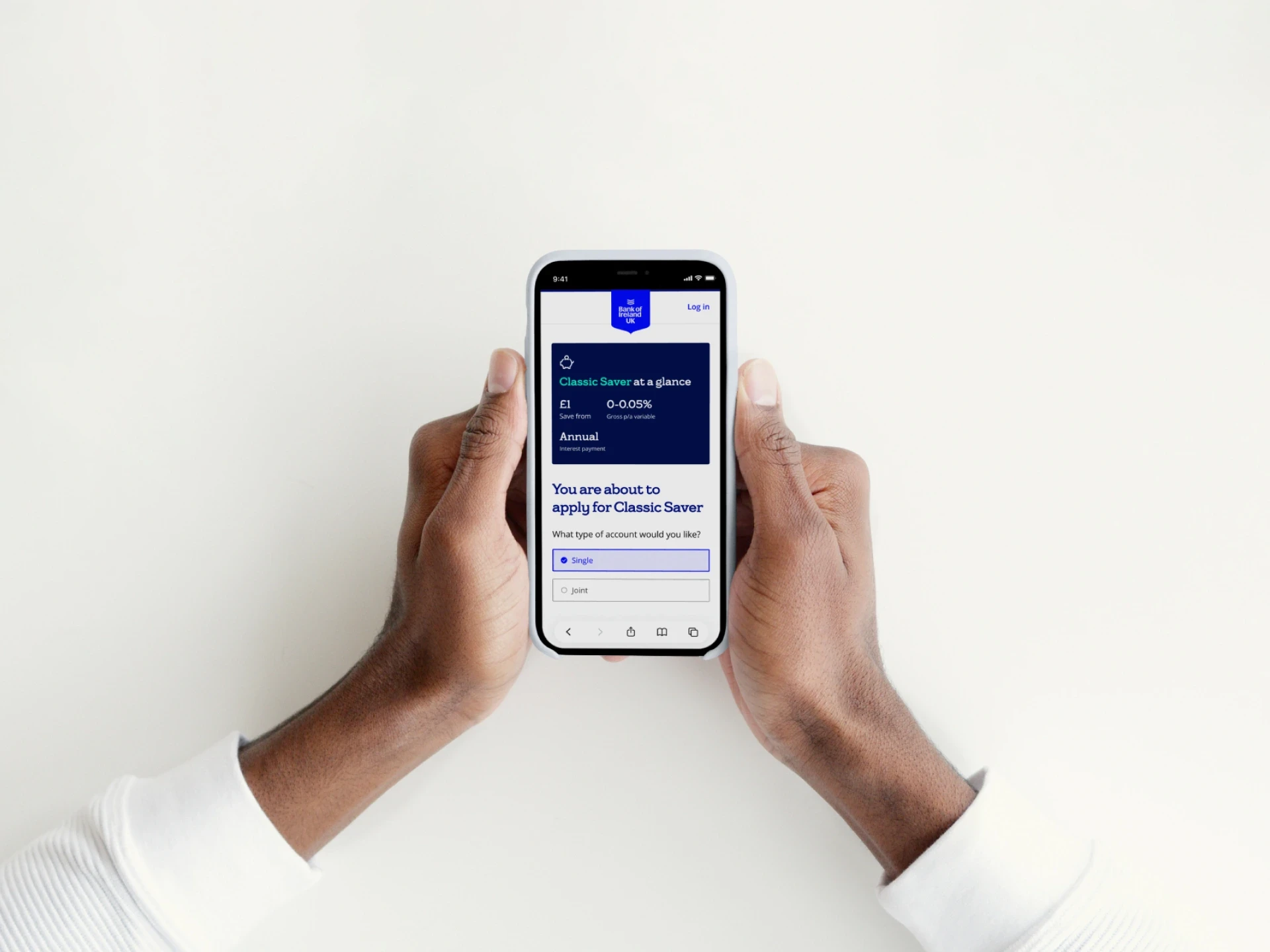
Design approach and research
We operated within a structured workflow where Business Analysts developed user scenarios through collaboration with the contracting client and financial services product owners, the CX team created wireframes based on these scenarios, and my team translated these into final visual designs.
Research Integration
Accessibility Testing: Incorporated learnings from CX team's usability sessions with elderly customers across UK and Ireland
Validation Methods: Applied insights from rapid click tests and heat mapping exercises to inform design decisions
Sprint Framework
2-week sprints with mid-sprint WIP reviews for stakeholder feedback
Design handoff process requiring 48-hour written approval cycles
Cross-functional collaboration translating requirements into production-ready designs for offshore development teams
Design foundations
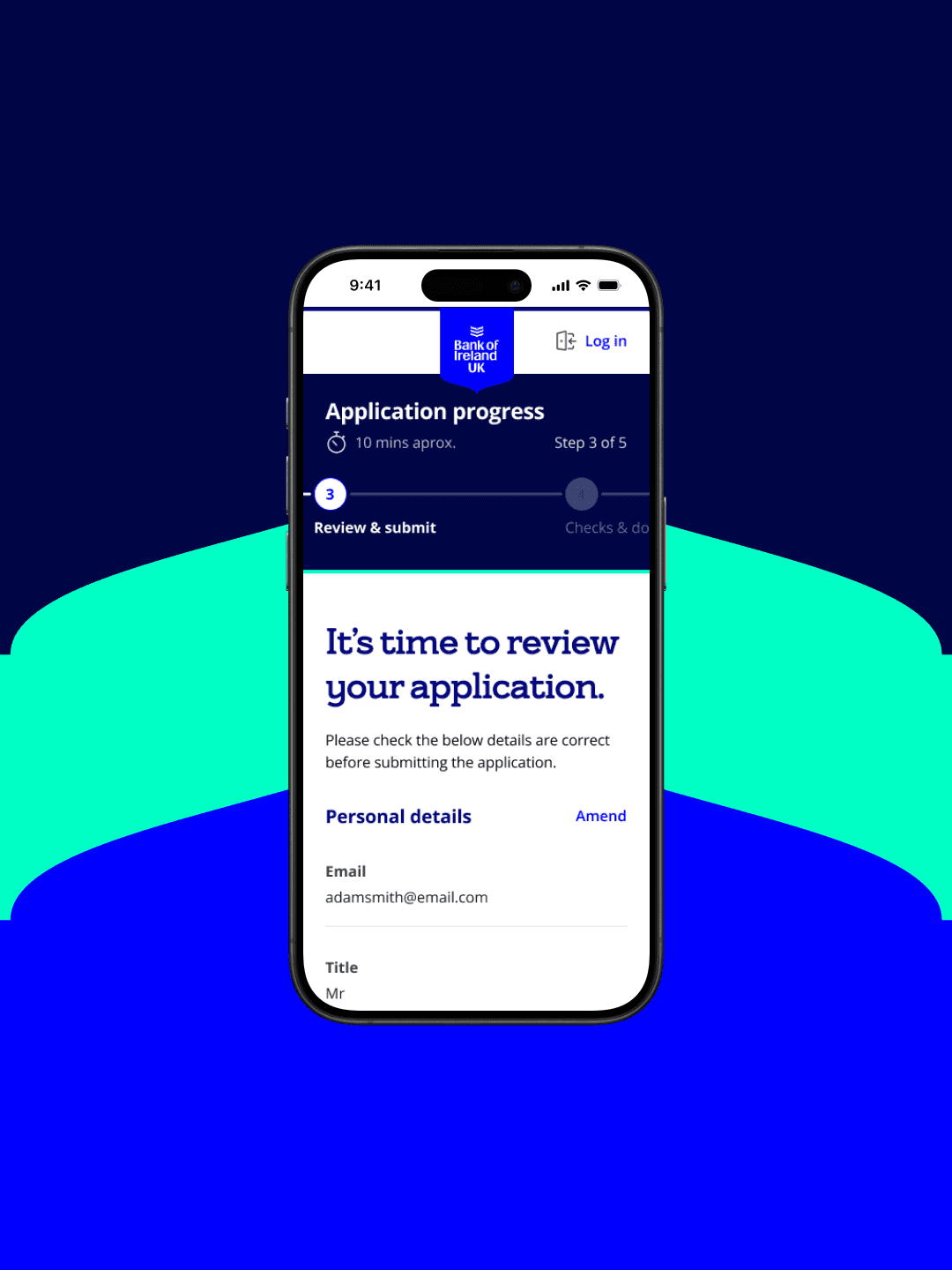
We designed a system that brings focus and clarity to single actions, rather than overwhelming the user with a multitude of options on every page. This approach included implementing a progress stepper that served as a visual indicator managing user expectations through complex financial applications and creating task-focused pages where each screen was designed around a single primary action.
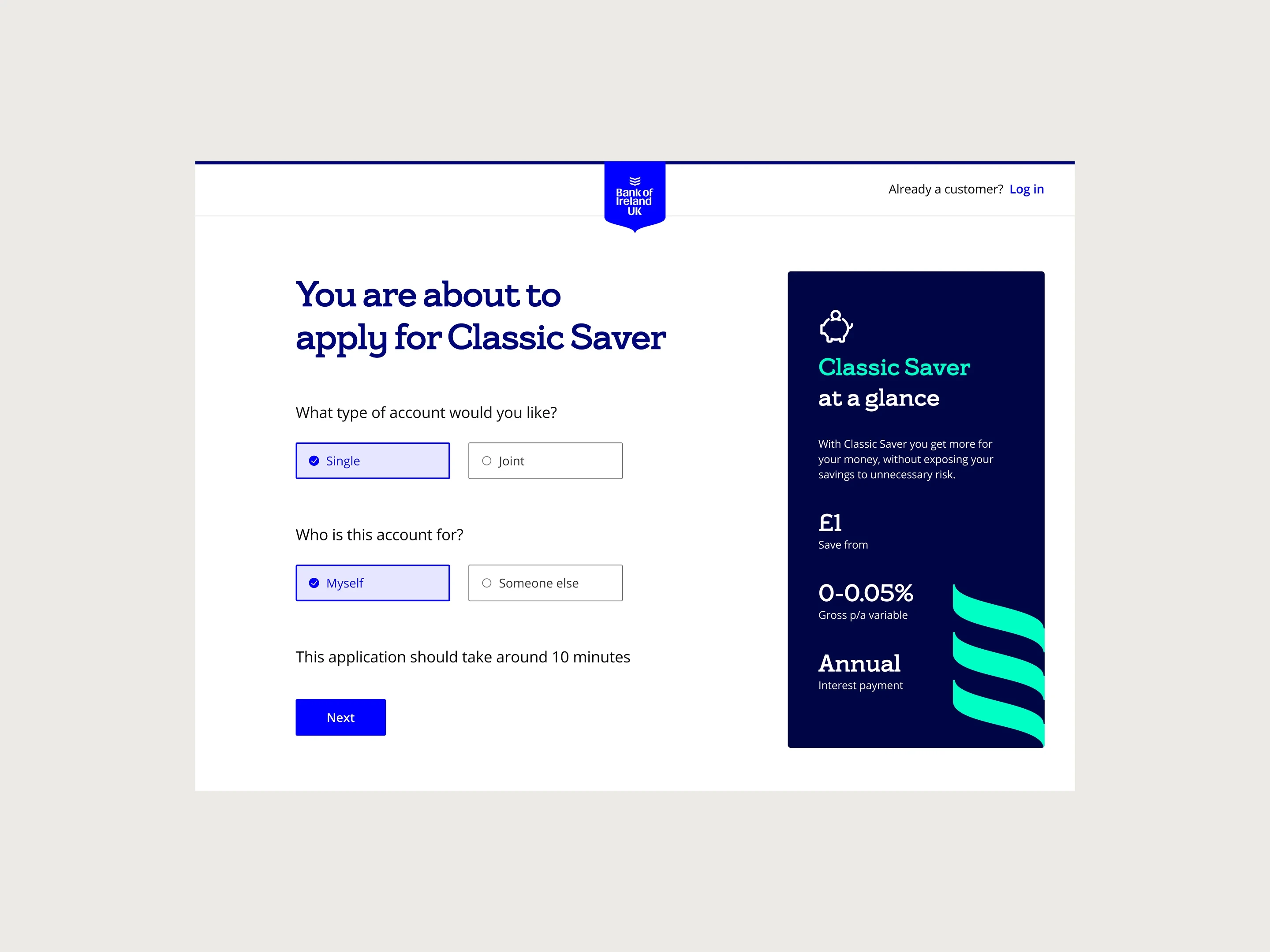
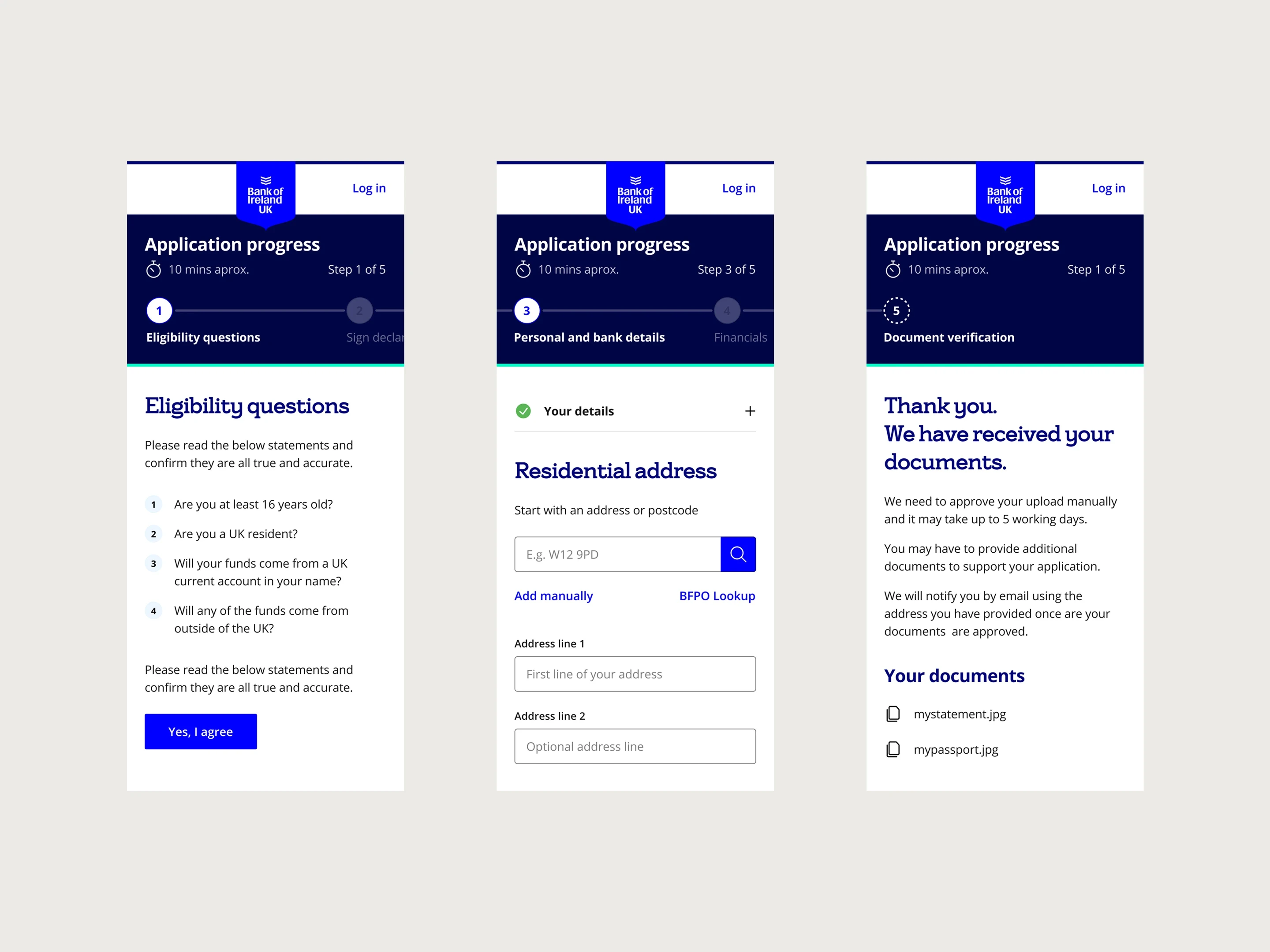
Accessibility-First Design System
We created WCAG AA compliant components with high-contrast color schemes, increased font sizes, simplified iconography, and appropriately sized touch targets for users with limited dexterity. All interactive elements supported screen reader compatibility and keyboard navigation, with error states using clear, human-language messaging.
Multi-Brand Implementation
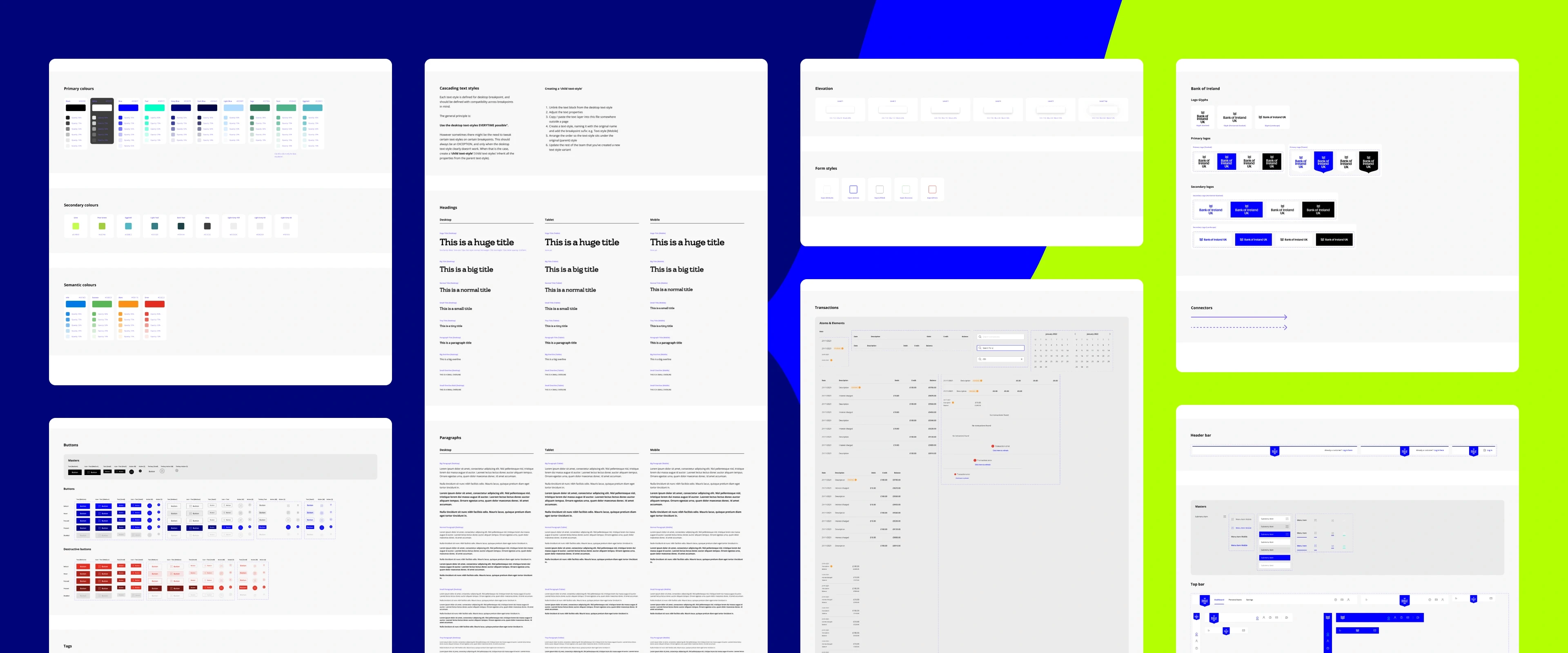
We designed comprehensive UI components for Bank of Ireland as the primary brand, then manually adapted each element for Post Office and The AA through a reskinning process. Working with the offshore brand squad, we maintained functional consistency across all three brands while respecting distinct visual languages, creating detailed handoff documentation for accurate implementation.
The components spanned foundation elements (typography, colours, spacing), interactive elements (buttons, forms, progress indicators), layout modules (cards, data displays), and full page templates. While this manual approach ensured accurate brand representation, it highlighted opportunities for more efficient token-based systems in future multi-brand projects.
Design solutions
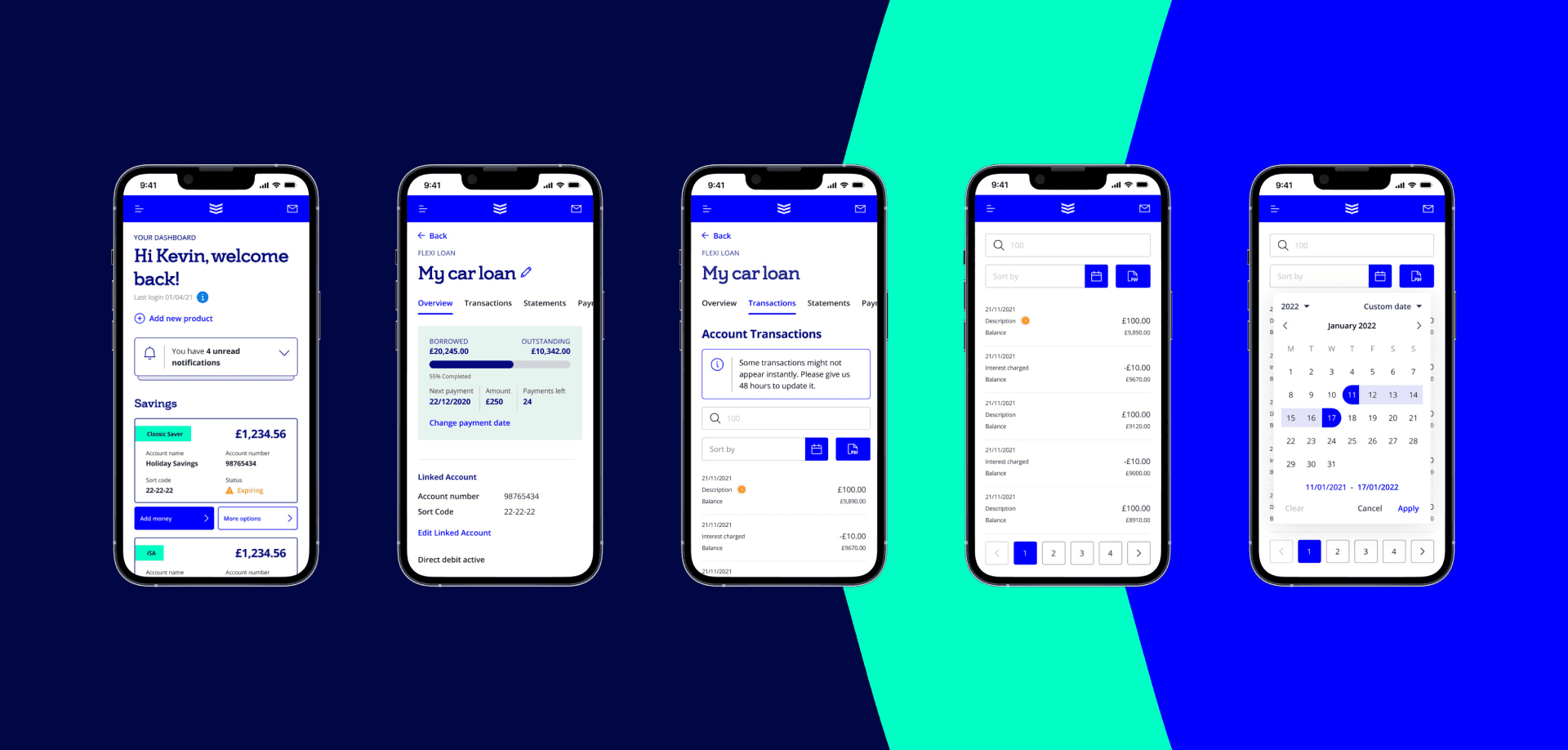
Customer Hub Dashboard
Clear visual hierarchy emphasising account balances and recent activity
Clear action buttons for primary tasks (transfers, payments, applications)
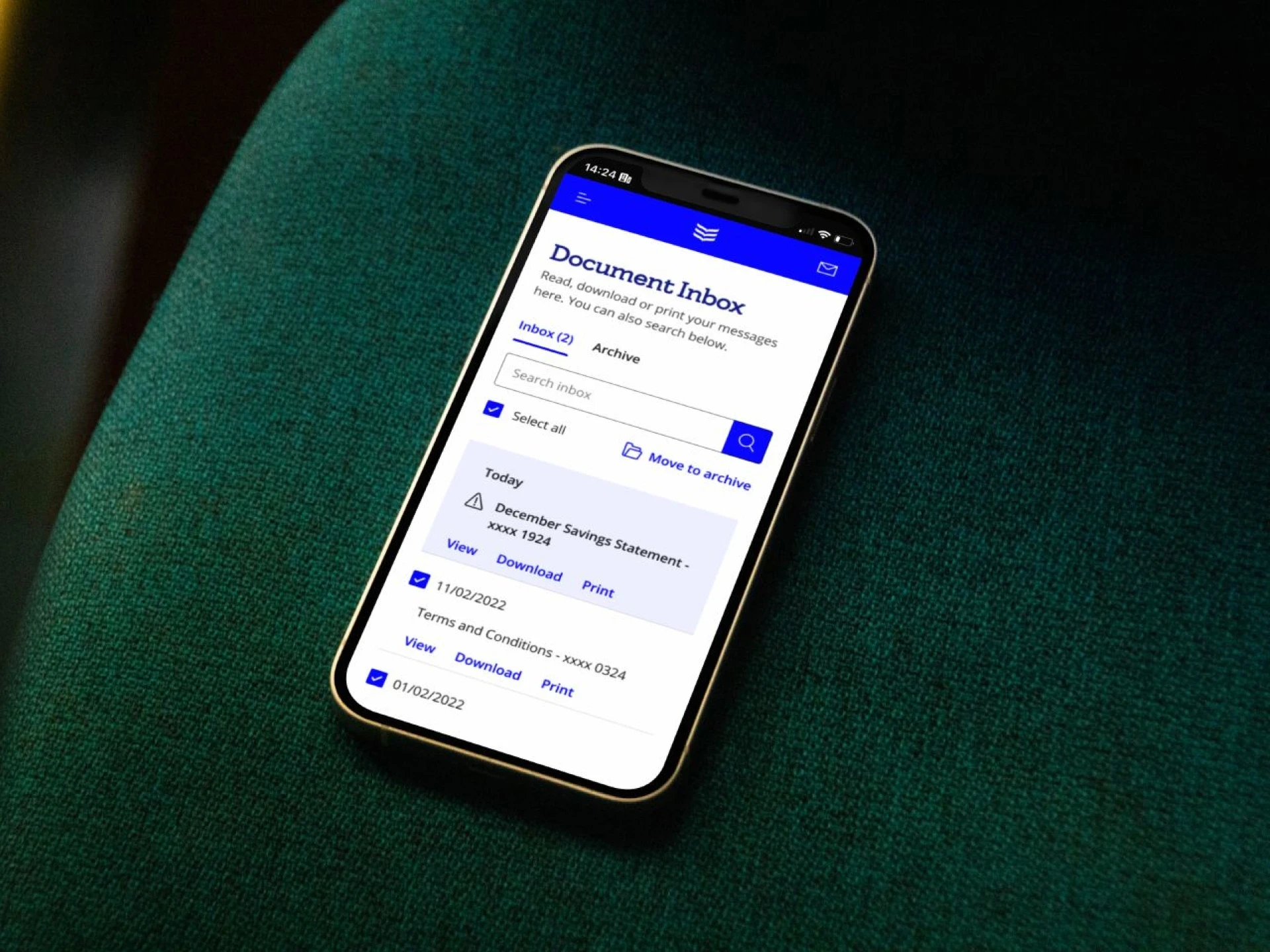
Notification system and document inbox for important banking communications
Progress Stepper System
Visual progress indication across multi-step applications
Save and continue functionality for incomplete applications
Clear next-step communication and time estimates
Form Design Pattern
Single-column layouts reducing visual complexity
Grouped related information with clear section headings
Inline validation with constructive error messaging
Document inbox
Clean, email-like interface for bank communications
Clear visual distinction between read/unread messages
Secure file attachment system for document submission
Integration with main navigation for easy access
The results
Project delivery
+
unique screens
+
user flows
distinct brands
Design system contribution
We developed cohesive UI components spanning foundation elements, interactive elements, and full page templates. The team successfully adapted designs across three brand identities while maintaining functional consistency. We created detailed handoff documentation enabling smooth collaboration with offshore development teams.
Professional development
This project demonstrated my ability to balance user needs, technical constraints, and business objectives in a highly regulated industry. Working as part of a collaborative team on Bank of Ireland's digital transformation reinforced my approach to inclusive design and multi-brand system architecture, while the complex stakeholder environment proved my capability to deliver quality design solutions under pressure.
Key learnings
Design System Efficiency
Working through the manual brand adaptation process highlighted a significant improvement opportunity. While we successfully delivered three distinct brand experiences, individually reskinning each component was time-intensive and prone to inconsistencies. This taught me the value of design token architecture from project inception. In future multi-brand projects, I would advocate for token-based systems that allow instant brand configuration rather than manual redesign.
Collaborative Design Process
This project reinforced the value of clear role definition in large design teams. Understanding the boundaries between BA scenarios, CX wireframes, and UI implementation helped me contribute more effectively within the established workflow and created smoother handoffs with development teams.
The experience reinforced my belief that thoughtful, accessible design isn't just the right thing to do, it's also good business: enabling organisations to serve broader audiences while building trust and loyalty in competitive markets.
ayşe is pronounced aishé.
she/her.