Capturing demand in quiet luxury:
The rollout of Notify Me
In early 2024, following the sellout of Phoebe Philo’s debut collection, I led the design of Notify Me: a waitlist to capture demand between drops. Built in just four weeks, it converted 26% of notified customers while protecting the brand’s sense of exclusivity.
Role
Senior Product Designer (Design Lead)
Product
E-commerce
Year
2024
All images courtesy of phoebephilo.com
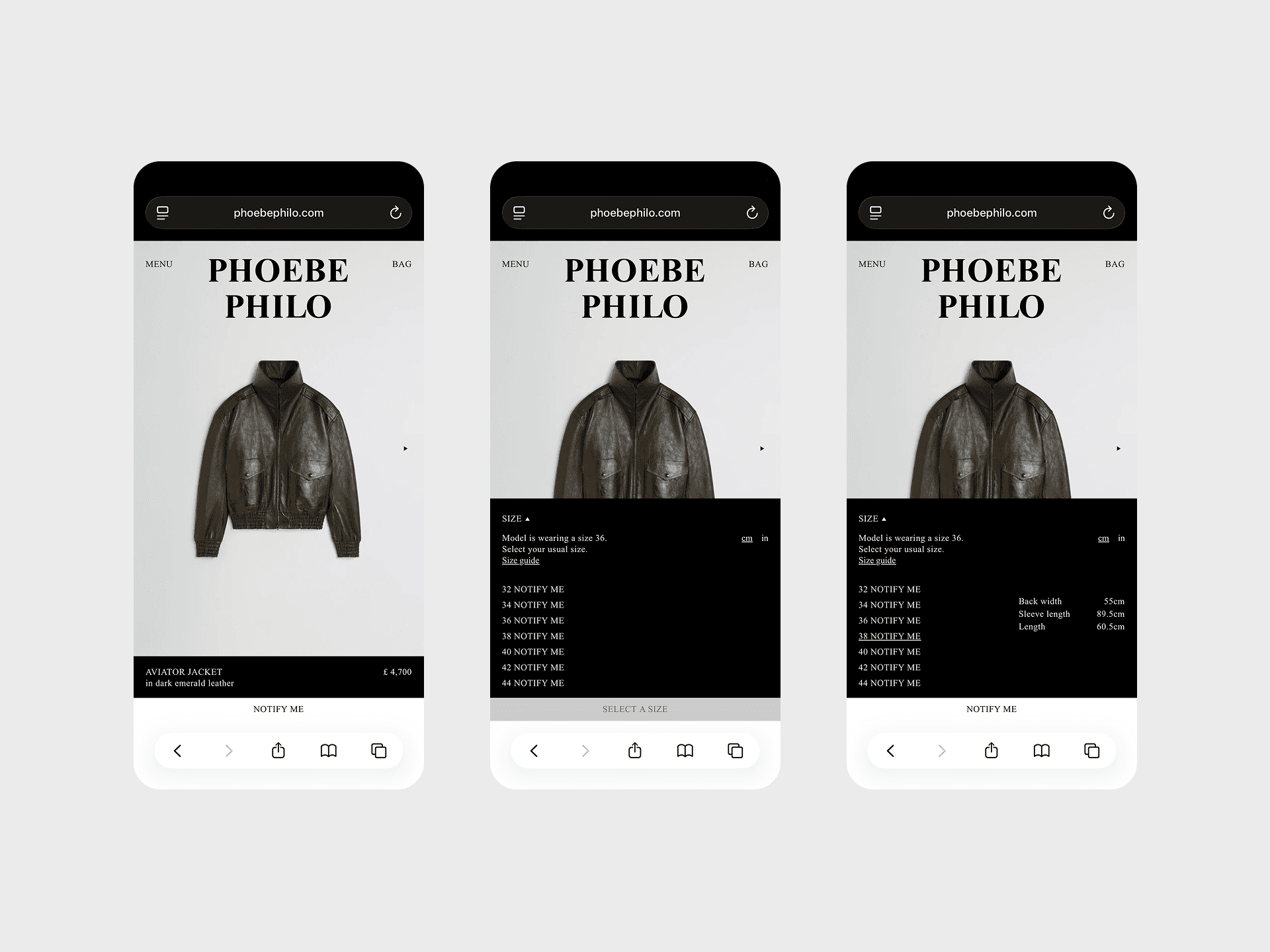
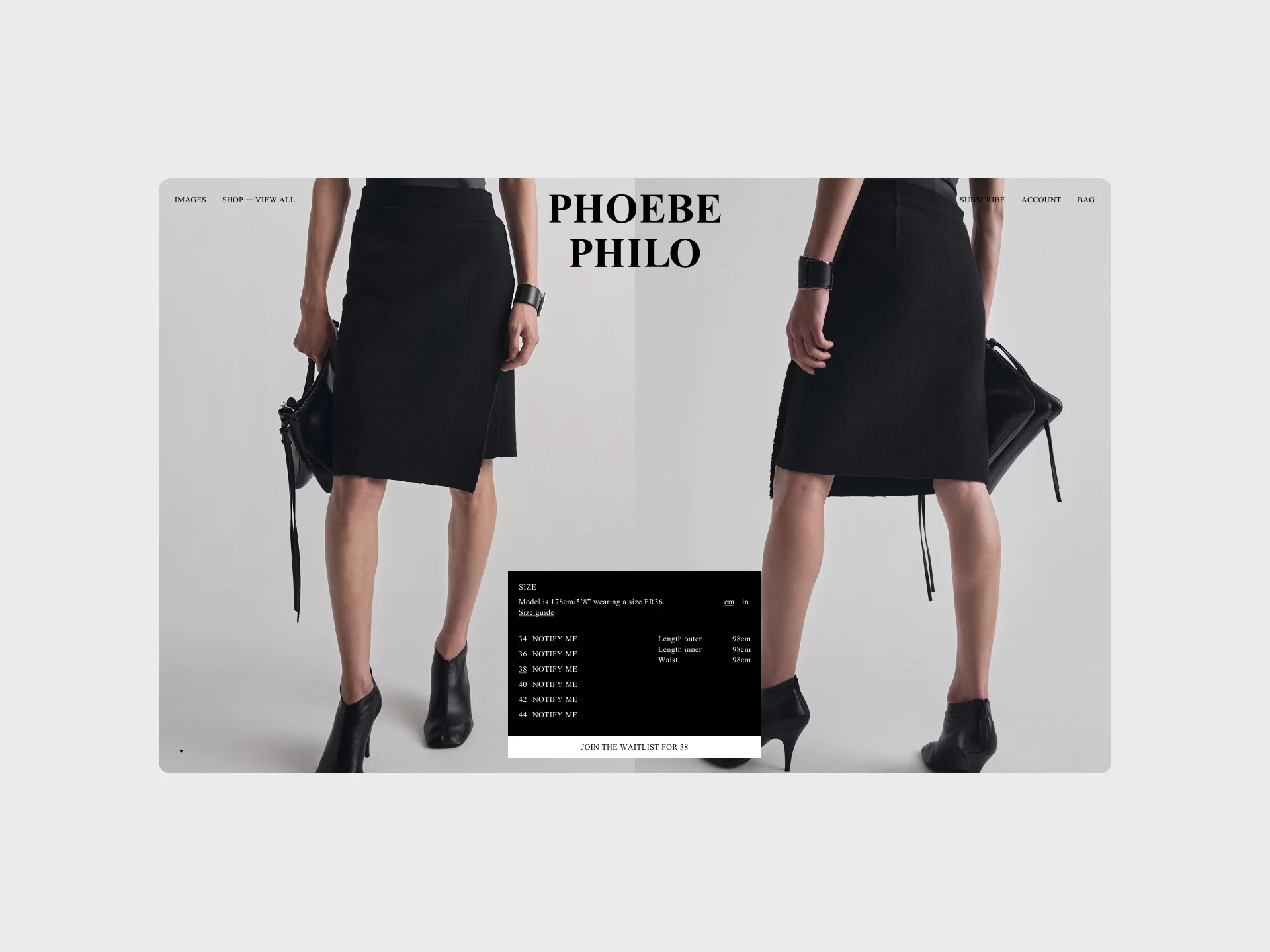
PDP with Notify Me styles
The context and the problem
In October 2023, Phoebe Philo launched her LVMH-backed, digital-only fashion brand. Working within a two-person UX team, I had end-to-end ownership across the e-commerce experience, which handled an unprecedented demand: 484,000 visitors in 48 hours, with 98% of products selling out.
The launch confirmed the strength of that demand, but very quickly it became clear that we had no way to capture it once inventory was gone.
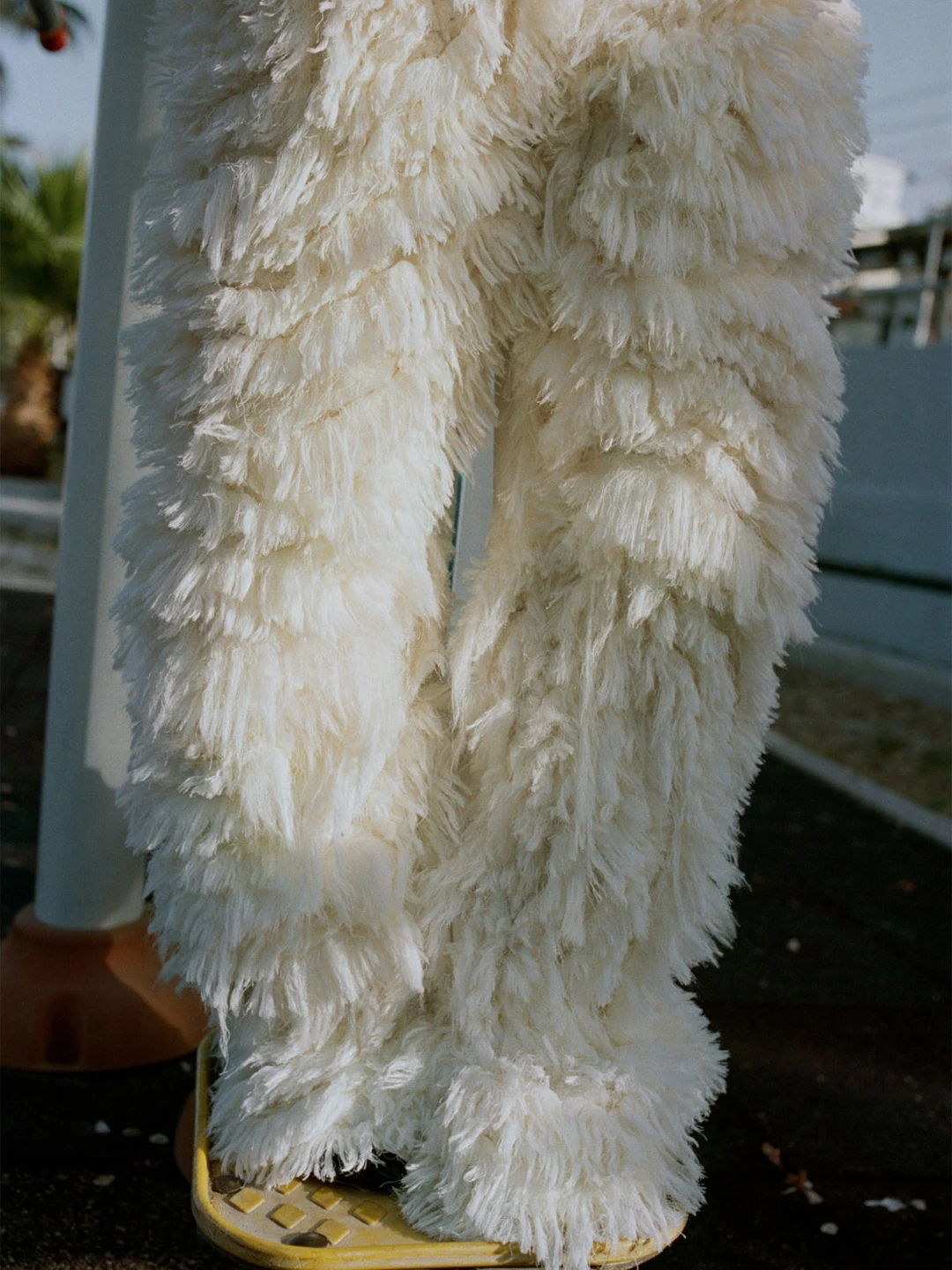
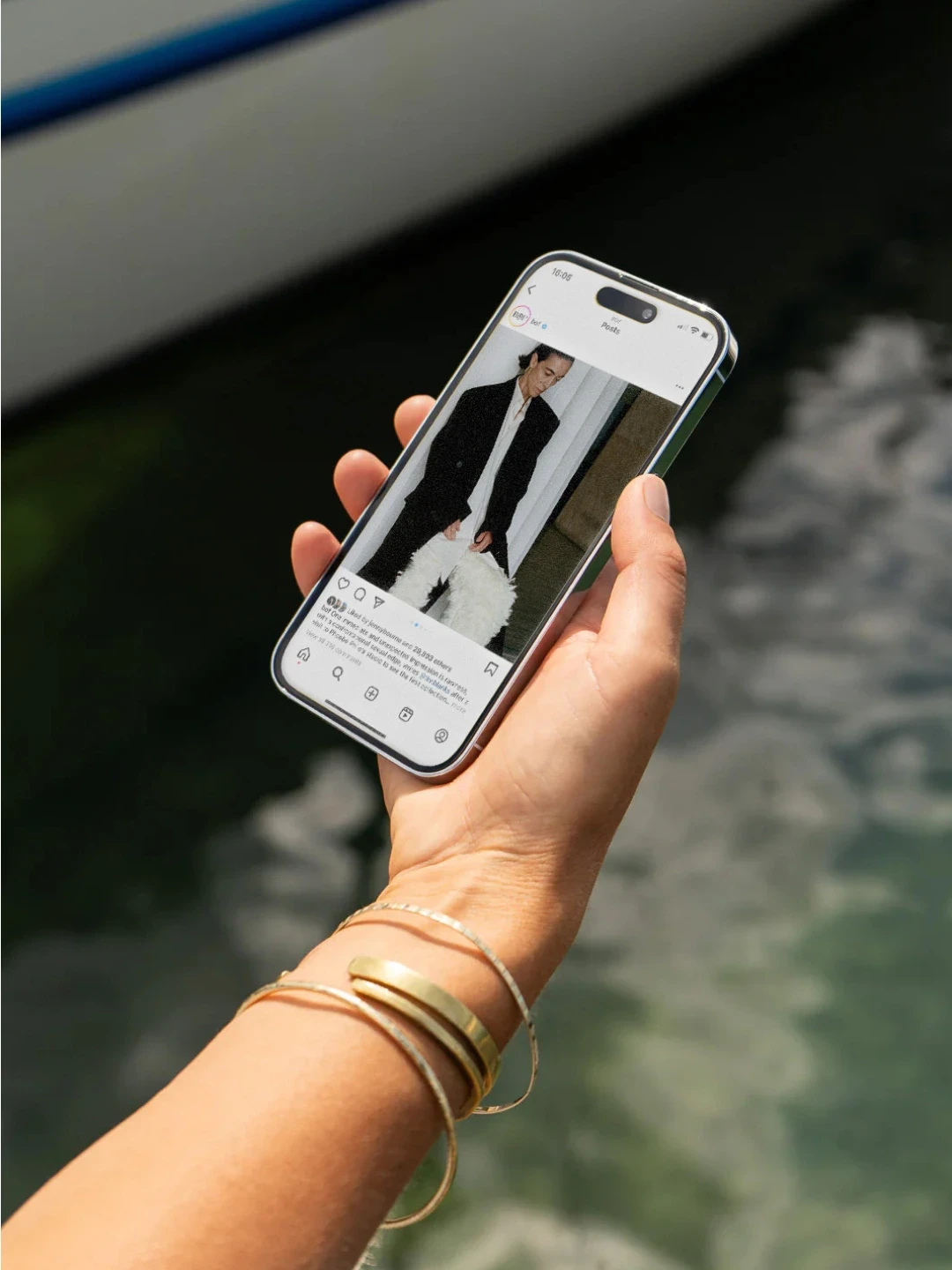
The feedback from the customers was direct:
"I've been waiting months. It's sold out within minutes."
"Wanted to wear it for my wedding. Couldn't purchase."
"Disappointing and frustrating. Felt like a waste of time."
The red overlay we'd designed to communicate that products were sold out was doing its job, but it was also amplifying frustration. Customers who came to explore, compare, or simply engage with the brand were hitting a wall.
The tension
The business case was straightforward: capture unmet demand, reduce Customer Support workload, and smooth unpredictable sales surges.
The customer case was equally clear: give people a fairer way to express interest in sold-out products and rebuild trust after they'd felt locked out.
But the brand saw a risk. A waitlist could imply that scarcity was a problem to solve rather than an intentional part of the brand experience. Making restocks more accessible could undermine the sense of exclusivity that defined the brand.
The reframe
I reframed the conversation around a simple principle:
Customer loyalty comes from satisfaction, not limitation. Scarcity can create desire, but it doesn’t necessarily foster connection.
The challenge was to acknowledge demand without compromising the sense of exclusivity.
The solution
Benchmarking gave us two established answers. Luxury treats scarcity as a feature: tiered loyalty, priority access, waiting as a form of status. Streetwear treats it as logistics: virtual queues, waiting rooms, waitlists engineered to convert.
Our position sat between them. Transparent about availability, considered in tone, a waitlist with no urgency mechanics attached.
Three approaches
I mapped three concepts by user fairness, operational simplicity, and brand alignment:
#1 — Brand Focused
Waitlist at the style level, only activated when an item is sold out across all sizes.
#2 — UX First
Waitlist at the size level with single-click activation for logged-in users.
#3 — Lean MVP
Waitlist at the size level, using an existing HubSpot form (POA inquiries).
Comparing approaches
Option
The decision
The lean MVP gave us the strongest balance: high customer value, low technical effort, and a realistic path to ship within four weeks, all before investing in a more complex system. The interaction, messaging, and visual treatment had to feel true to the brand.
The experience
The core interaction was simple. When a size was sold out, customers could select Notify Me and register their interest. If that size came back into stock, they would receive an email. We kept the mechanism focused on genuine purchase intent by limiting customers to one size per style.
We removed the red overlay from sold-out products to invite engagement. Instead of ending the interaction, the product could now remain part of the customer’s consideration.
Notify Me in action
The results
Initial response
1 week
after rollout
%
conversion rate
%
of converting customers purchased additional products
The outcome
The feature turned sold-out products from a dead end into a way to capture purchase intent between drops.
More importantly, it created a new source of product intelligence. Demand signals showed us which products warranted larger production runs, helping inform future drops.
The reflection
Notify Me reinforced a principle I now carry into product decisions: in luxury e-commerce, scarcity doesn't have to mean exclusion. By giving customers a way to express genuine interest, we made them feel heard and created a more inclusive experience without compromising the sense of exclusivity.
This process also proved the value of a lean approach when there’s a need to build a case for change. We used a focused MVP to test the idea, demonstrate its value, and build confidence across the business before committing to a more complex solution.
ayşe is pronounced aishé.
she/her.